
Why Is Protein Powder So Expensive in India? (2026)
India makes more milk than any country on earth, yet a 1 kg tub of whey still costs thousands. The reason starts in a cheese factory and ends with a number almost nobody checks.

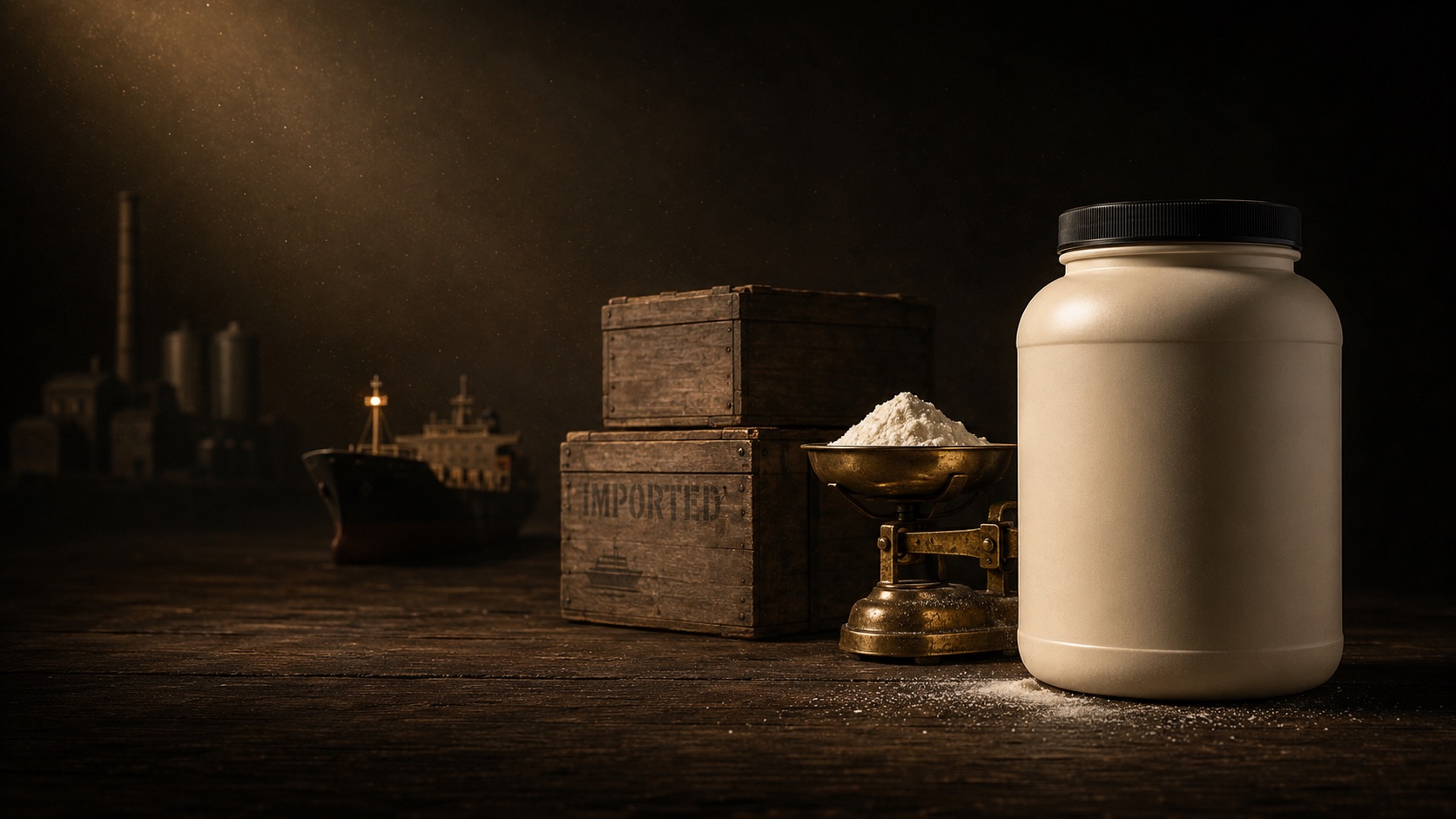
A 1 kg tub of whey protein in India can cost ₹3,000, ₹4,000, ₹5,000 or more. Milk is cheap here. Whey is a byproduct of making cheese. So why does a tub of powder cost as much as a week of groceries?
The short answer: you are mostly not paying for milk. You are paying for an imported, heavily processed industrial ingredient, plus everything that happens to it between a foreign cheese factory and your kitchen shelf.
Here is the honest version of where the money goes, and the one number that tells you whether a particular tub is expensive or simply overpriced. Those are not the same thing.
- ·Whey comes from cheese making, and India makes very little cheese
- ·So most supplement grade whey is imported and priced globally
- ·A weaker rupee raises the cost even when the dollar price has not moved
- ·Filtering concentrate, isolate and hydrolysed whey needs specialised plants
- ·Testing, flavouring, packaging, logistics, retailer margin and tax stack on top
- ·And then marketing, which can be the single largest gap between two similar tubs
Whey is not powdered milk
Whey protein does not come straight out of a milk tanker. When milk is turned into cheese, it splits into curds and a watery liquid. That liquid is whey, and it carries protein, lactose, minerals and fat.
Getting from that liquid to the powder in your scoop takes real industrial work:
- Concentrate is filtered to raise the protein share, and keeps some lactose and fat.
- Isolate is filtered much further, stripping out most of the lactose and fat.
- Hydrolysed whey goes one step further again, breaking proteins into smaller pieces.
Each step needs specialised equipment and loses volume along the way. That is why isolate costs more than concentrate: you are paying for filtration, not for better protein.
India has the milk, but not the cheese
This is the part that surprises people. India produces more milk than any other country on earth. And it still imports a great deal of its supplement grade whey.
The reason is simple once you see it. Whey is a byproduct of cheese. Indian dairy has historically been built around milk, curd, paneer and ghee, not large scale cheese production. You can have an ocean of milk and still not generate much whey, because the two are not the same industry.
Why that matters at checkout
An imported ingredient is priced in a foreign currency and moved by ship. So your tub is exposed to three things happening far from your gym: the global whey price, freight costs, and the rupee. When the rupee weakens, imported whey gets more expensive here even if its dollar price never moved.
What ₹4,000 actually buys
Here is where people get the story wrong in the other direction. A ₹4,000 tub does not contain ₹4,000 of whey. Not close.
Between the ingredient and the shelf sit manufacturing and blending, lab testing and quality control, flavouring, the tub and label, warehousing, transport, distributor margin, retailer margin, and tax. Then marketing: ads, athlete deals, influencer payments, the lot. All of it is recovered from the tubs that sell.
None of that is a scandal. It is what any packaged product costs. But it does explain why the powder itself is a smaller slice of the price than most buyers assume, and why two tubs with near identical nutrition panels can sit on the same shelf hundreds of rupees apart.
So how do you tell expensive from overpriced?
The price on the front of the tub cannot answer that, because it says nothing about how much protein is inside. A ₹4,000 tub can be cheaper than a ₹3,500 one.
Take two real shaped examples:
- Tub A, ₹4,000, holding 750 g of protein, works out at ₹5.33 per gram.
- Tub B, ₹3,500, holding 600 g of protein, works out at ₹5.83 per gram.
Tub B is the cheaper tub and the more expensive protein. That is the whole trick.
Cost per gram of protein. Multiply protein per serving by servings per tub, then divide the price by that. Across the whey we currently track it runs from about ₹4.50 to ₹8.60 per gram, with the middle of the pack near ₹5.75. It ignores pack size, flavour and packaging, which is exactly why it works.
The discount is not the deal
MRP is set by the brand. That makes the discount percentage almost meaningless on its own.
A tub with an MRP of ₹6,000 selling at ₹3,800 shows a dramatic 37% off. Another with an MRP of ₹4,500 selling at ₹3,900 shows a modest 13%. The loud discount is on the cheaper tub here, but only by coincidence. Set the MRP high enough and any price looks like a bargain.
We wrote about the wider pattern in how brands inflate protein numbers. Discount theatre works the same way: the number is designed to be looked at, not to be useful.
The part you can actually control
You cannot move global whey prices or the exchange rate. You can absolutely control which shop you buy from, and that gap is larger than most people expect.
Here is a real one from our catalogue, live right now:
Avvatar Whey Protein · 2Kg
Same product, same size, 7 shops. ₹3,888 between the cheapest and the dearest, a 35% difference for identical powder. Cheapest at Flipkart, dearest at Tata1mg.
Identical tub. Identical powder. Thousands of rupees apart depending on where you click buy. And it is not a one off: across the products we track with three or more live listings, the typical gap between cheapest and dearest is a few hundred rupees, and the extremes look like the one above.
That is money you save by checking, not by shopping cheaper brands or waiting for a sale.
So is protein powder overpriced?
Mostly, no. It is genuinely expensive to make and bring here. Imported ingredient, real processing, real testing, real logistics.
But some of it is overpriced, and the difference is not always in the tub. Two products with the same protein source and nearly the same panel can sit ₹1,500 apart, and that gap is brand and marketing, not whey. Some brands charge more simply because buyers will pay it.
Both things are true at once. Protein powder is expensive for real reasons, and you can still be overpaying for it.
What to do before you buy
- Check the protein source is named clearly, not hidden in a blend.
- Read protein per serving off the panel, not the claim on the front.
- Work out the total protein in the tub, then the cost per gram.
- Ignore the discount percentage entirely.
- Check what the same tub costs at other shops before you check out.
The first four tell you whether the product is worth buying. The last one tells you whether you are about to pay too much for it. You need both, and that is exactly what our comparison tool and the live whey listings are for.
If you are still deciding which tub to buy at all, start with our beginner picks, which rank on cost per gram of protein rather than on marketing.
The bottom line
India has plenty of milk and not enough supplement grade whey, so the industry imports, and imported ingredients carry global prices, freight and currency risk. Add processing, testing, packaging, distribution and marketing, and a ₹4,000 tub stops looking mysterious.
Understanding that is not a reason to accept whatever price is in front of you. Protein is expensive enough already. There is no need to pay more than you have to for the same powder.
This article reflects the independent editorial opinion of the Whey2Much team. We do not accept payment from brands for inclusion, ranking or placement. It draws on publicly available industry information and on the live pricing we track, and is intended as general education rather than investment, medical or nutritional advice. Prices, formulations, ingredient sources, certifications and availability change over time, and prices shown on Whey2Much are indicative and should be confirmed with the retailer before you buy. Supplements complement a balanced diet rather than replace one. If you are pregnant, breastfeeding, have a medical condition or allergies, or take medication, speak to a qualified healthcare professional before use.
Common questions
Because most supplement grade whey is imported. India leads the world in milk production but makes relatively little cheese, and whey is a byproduct of cheese making, so there is not enough domestic supply-grade whey for the supplement industry. That means Indian brands buy on the global market and carry global dairy prices, shipping and the rupee exchange rate. On top of the ingredient sit processing, testing, flavouring, packaging, distribution, retailer margin, tax and marketing.
Not reliably. Price mostly reflects brand, packaging, flavour development, pack size and marketing spend rather than protein quality. Across the whey we track, the cost per gram of protein ranges from about four and a half rupees to over eight and a half, and the most expensive is not the best. Judge a tub by its protein source, protein per serving, ingredient list and cost per gram of protein.
Multiply the protein per serving by the number of servings in the tub to get the total protein, then divide the price by that number. A 4,000 rupee tub holding 750 g of protein works out to 5.33 rupees per gram. It is the single most useful number when comparing supplements because it ignores pack size, flavour and packaging.
Across the whey products we currently track, the range runs from roughly 4.50 to 8.60 rupees per gram of protein, with a median near 5.75. Anything meaningfully above that is usually paying for branding rather than protein. Bigger tubs are almost always cheaper per gram than small ones.
Retailers set their own prices, run their own promotions and buy at different volumes, so the identical tub can differ by hundreds or even thousands of rupees on the same day. On the products we track with three or more live listings, the typical gap between cheapest and dearest is a few hundred rupees, and the widest we currently see is over 3,800 rupees on one 2 kg tub.
No. The discount is measured against the MRP, which the brand sets itself, so a high MRP produces an impressive looking percentage without a low final price. A tub at 40 percent off can easily cost more than one at 10 percent off. Compare the price you actually pay per gram of protein, not the size of the discount.
Prices move with global whey markets, shipping costs and the rupee, none of which a buyer controls. What is changing is domestic processing: as Indian dairy builds more supplement grade whey capacity, reliance on imports should ease. In the meantime the practical saving is not waiting for the market, it is not overpaying at checkout for a tub sold cheaper elsewhere.

Written by
Whey2Much
India's smartest supplement price comparison platform. We track real-time prices across the country's top retailers so you never overpay.
Keep reading
More from the journal.
Best Protein Powder for Women in India (2026): 8 Picks
The best protein powders for women in India in 2026, picked on protein quality and real cost per gram, not packaging. Live prices, no paid placements.
Best Protein Powder for Beginners in India (2026)
The best protein powders for beginners in India in 2026, picked on protein per serving, ingredients and cost per gram of protein. Live prices, no paid placements.

When Should You Actually Drink Your Protein Shake?
The 30 minute anabolic window is dead science. What decides results is your daily total, your per meal dose, and where one scoop fits into an Indian day.